DAC729 - Building a Vintage 18-bit Audio Decoder with 30-Year-Old Silicon
🔍 AI Assistance Disclosure (click to expand)
This note has been lightly edited with AI assistance for clarity during platform migration. All technical content, design decisions, and observations are my own original work from 2022.
Looking for polished project documentation? Check out Technical Projects.
Want my unfiltered thoughts? See Stories & Writing.
⚠️ Deprecation Warning (click to expand)
This is a very old project from my early years. Several important caveats:
- Many PCB designs were adapted from the hifidiy forum, not my original design
- I no longer have complete schematics for all boards (hifidiy server cut down)
- PCB layout violates modern high-speed design principles (even has 90° traces!)
- Not recommended for replication - view for entertainment purposes only
- But Still This Has Been A Lovely Project That Worth Reminiscence
Platform Migration Notice
Note: I’m in the process of migrating my DIY projects from various platforms to this website - a collection of work spanning nearly five years. This will take some time, and this is the very first post I’m porting over.
Quick Context
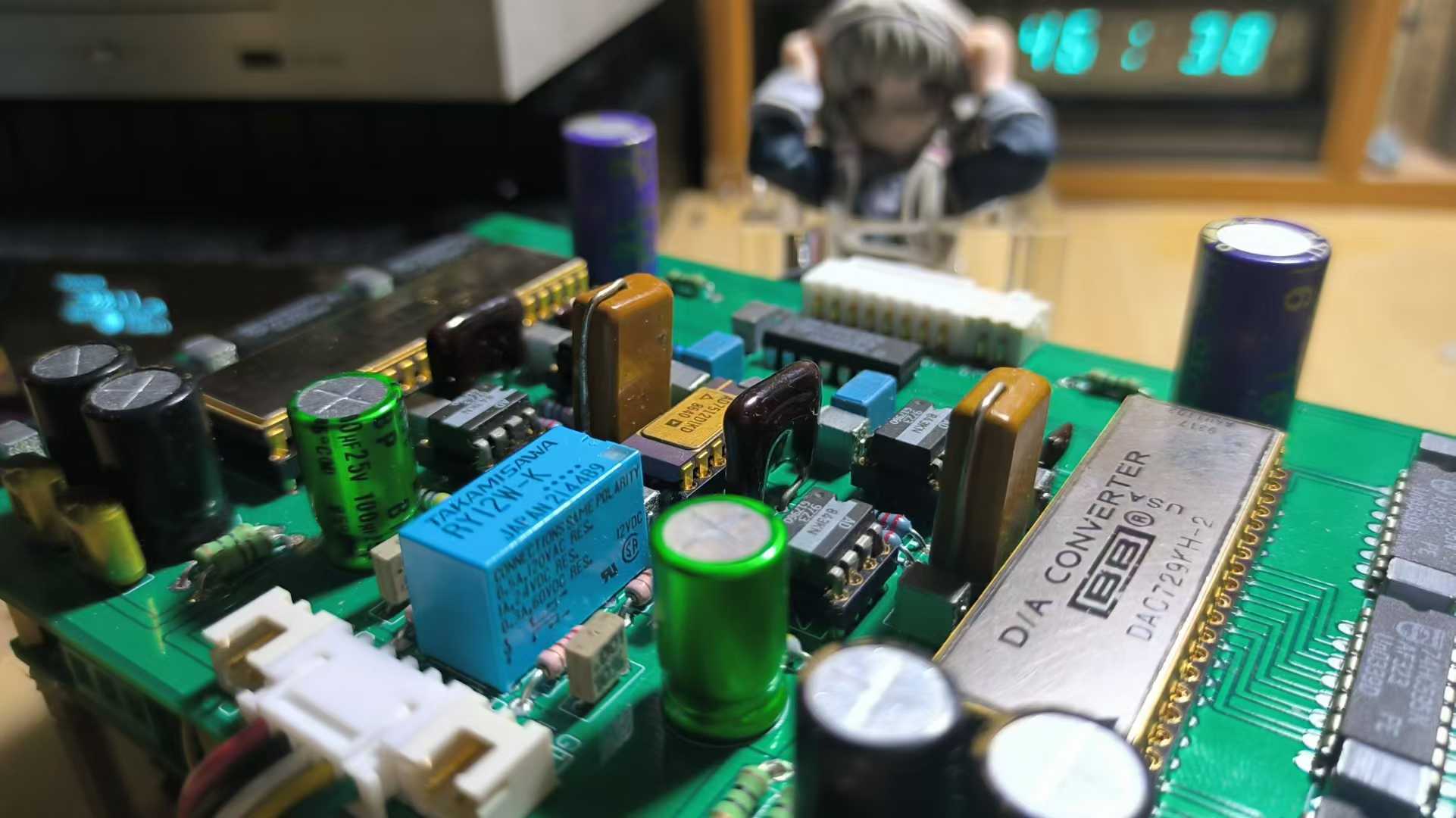
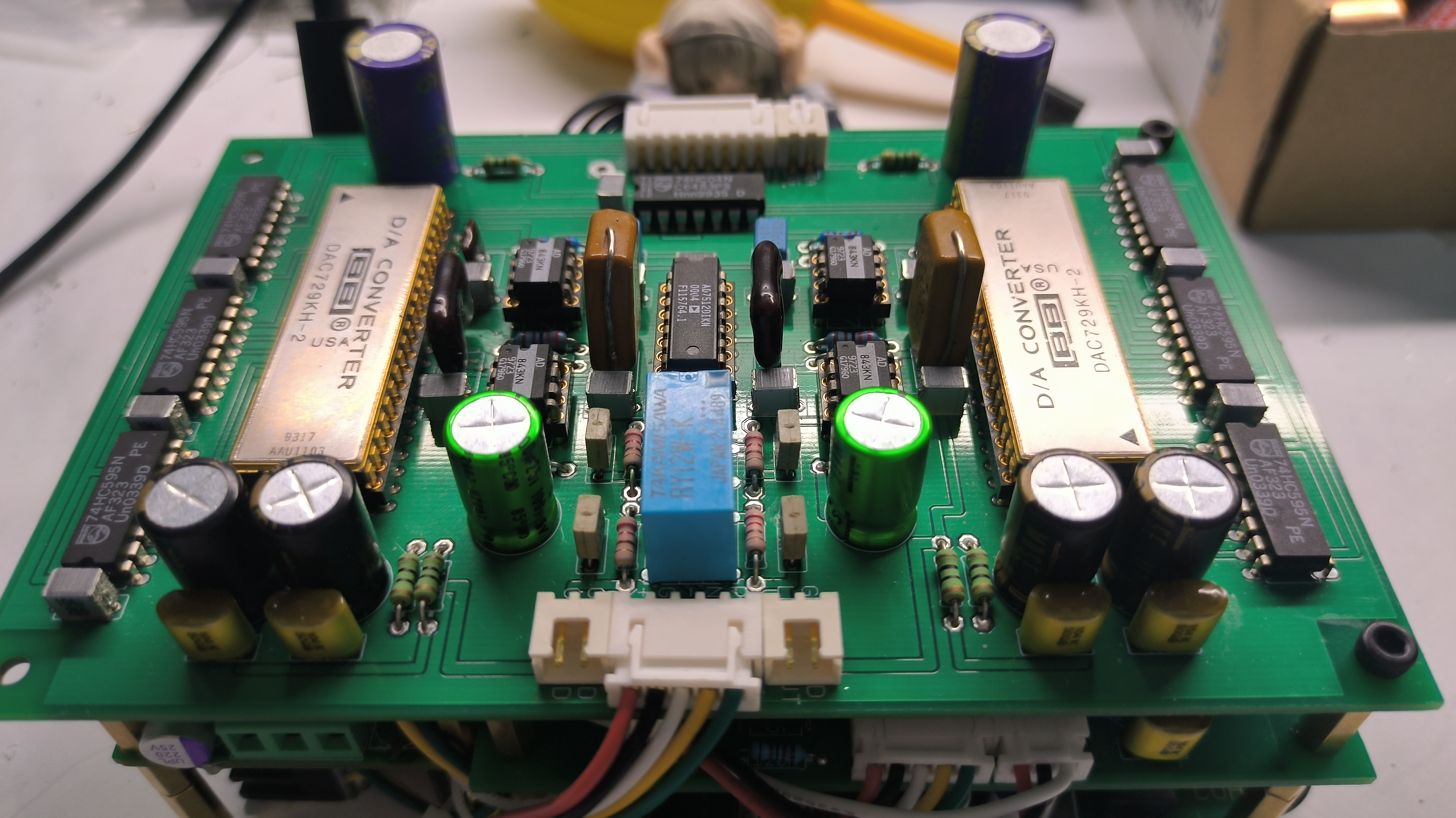
I acquired a pair of Burr-Brown DAC729KH chips from the secondhand market - these are vintage 18-bit R-2R precision DACs from the early 1990s. The DAC729 uses a hermetic CerDIP40 ceramic package with gold-plated pins and a shielded top cover brazed to the ceramic substrate.
This is the most beautiful chip I’ve ever seen! So adorable!
As a Hi-Fi enthusiast, the idea of making 30-year-old silicon play music seemed irresistibly fun. Five years later, this decoder still occupies a special place on my benchtop - the NOS + R-2R sound character is genuinely pleasing.
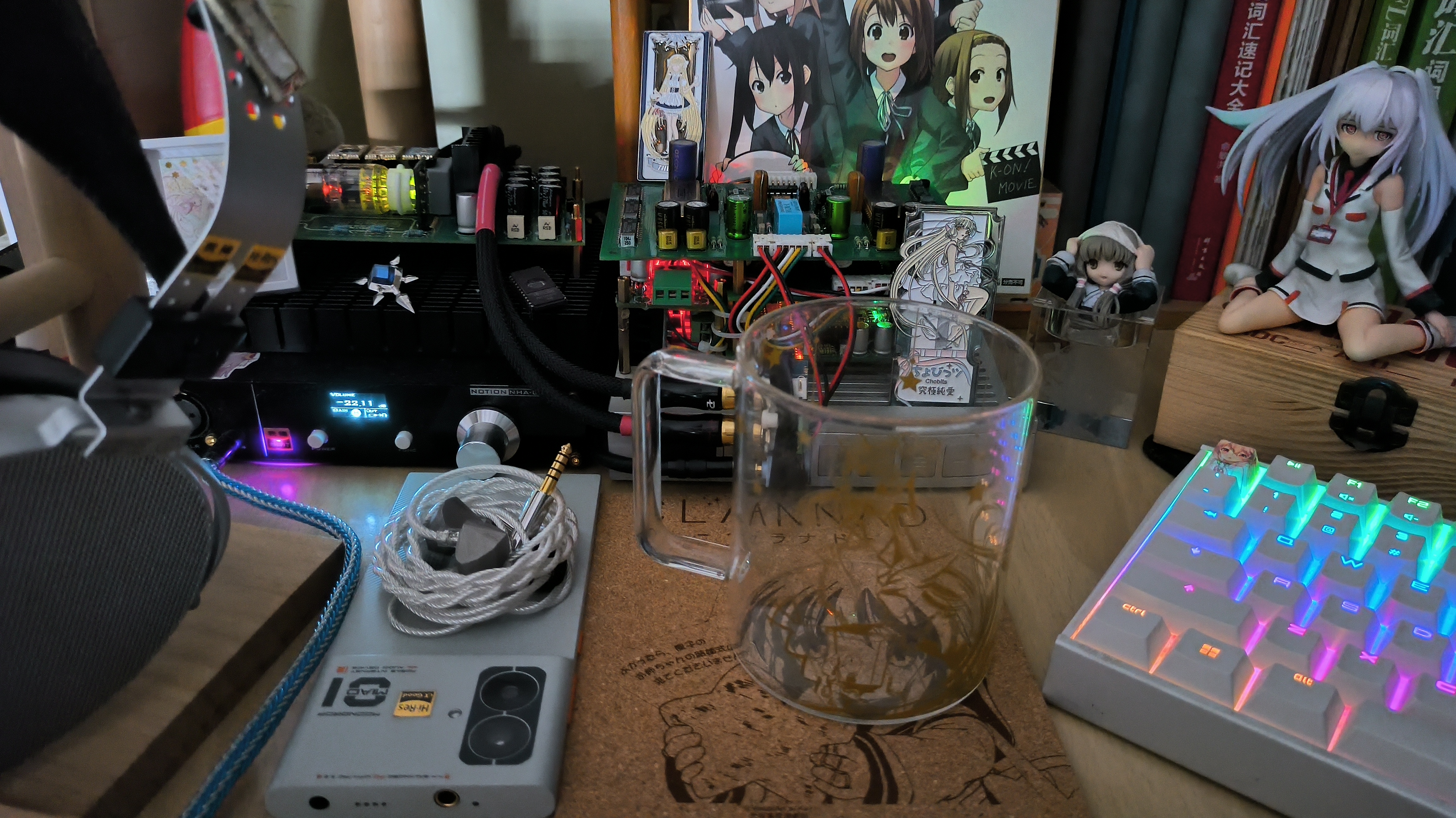
The Build - Fully Discrete Digital Logic
Digital Section: I2S to 18-bit Parallel Conversion
Getting the DAC729 to work as an audio decoder required some straightforward digital signal processing:
- Split I2S into separate left/right channels
- Truncate 32-bit audio to the most significant 18 bits
- Serial-to-parallel conversion using shift registers, generating sample/hold LE signal
- Parallel data transfer - send all 18 bits simultaneously to DAC729
Key design choice: Pure NOS (Non-Oversampling) design for maximum analog character - no upsampling, no digital filtering.
No FPGA. Instead, I used discrete 74-series logic ICs - a completely vintage approach! I specifically sourced Philips-manufactured white-print DIP 74-series chips (rather than laser-etched markings) for that authentic vintage aesthetic.
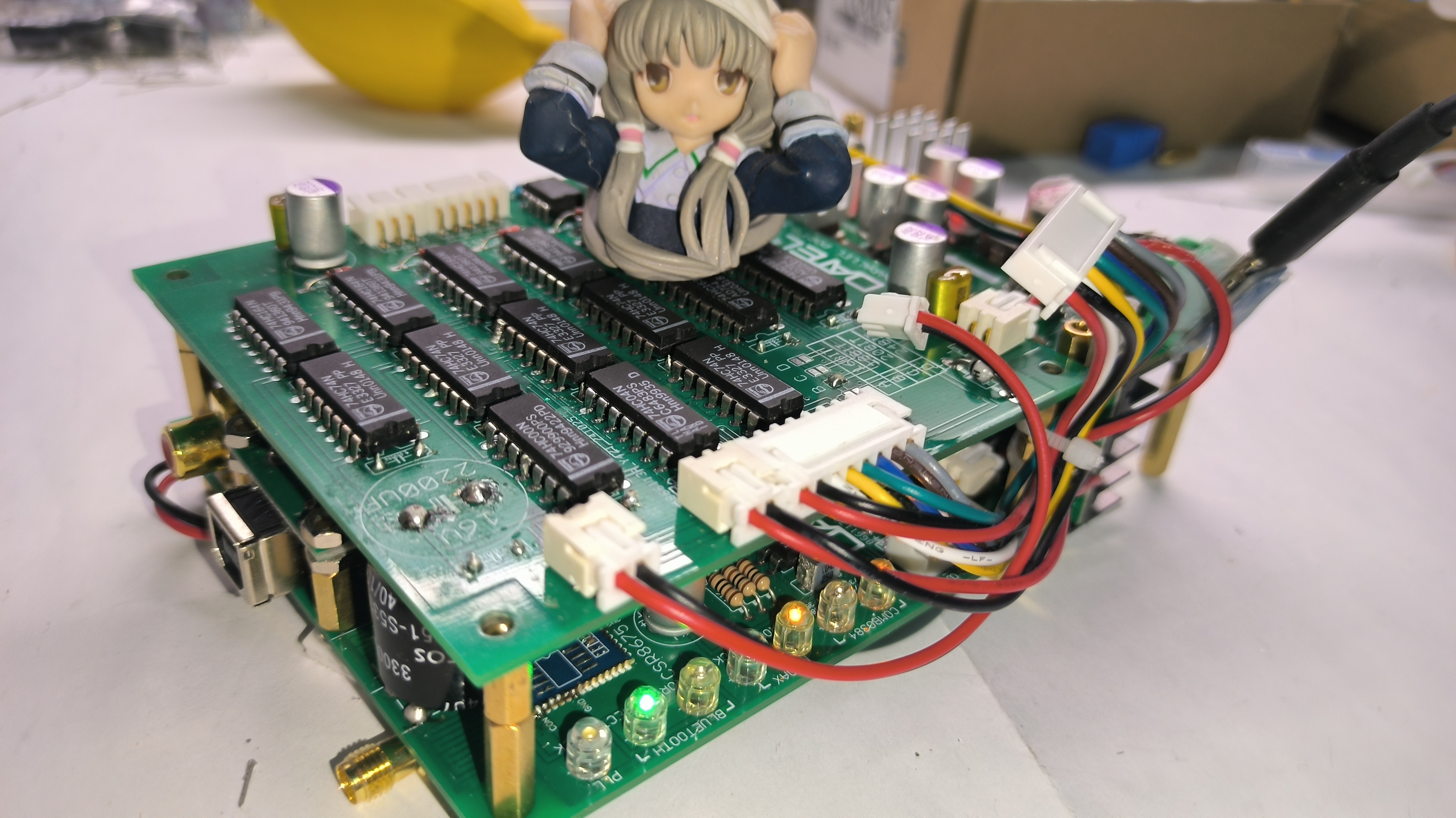
Analog Section: Sample-Hold Circuit
The DAC729 wasn’t originally designed for audio applications, so we need additional circuitry:
Sample-Hold Circuit to eliminate glitches:
- Uses analog switches to disconnect output before DAC729 settles
- Op-amp follower maintains previous output state during switching transients
- Implemented with AD7512 - another beautiful gold-sealed CerDIP package!
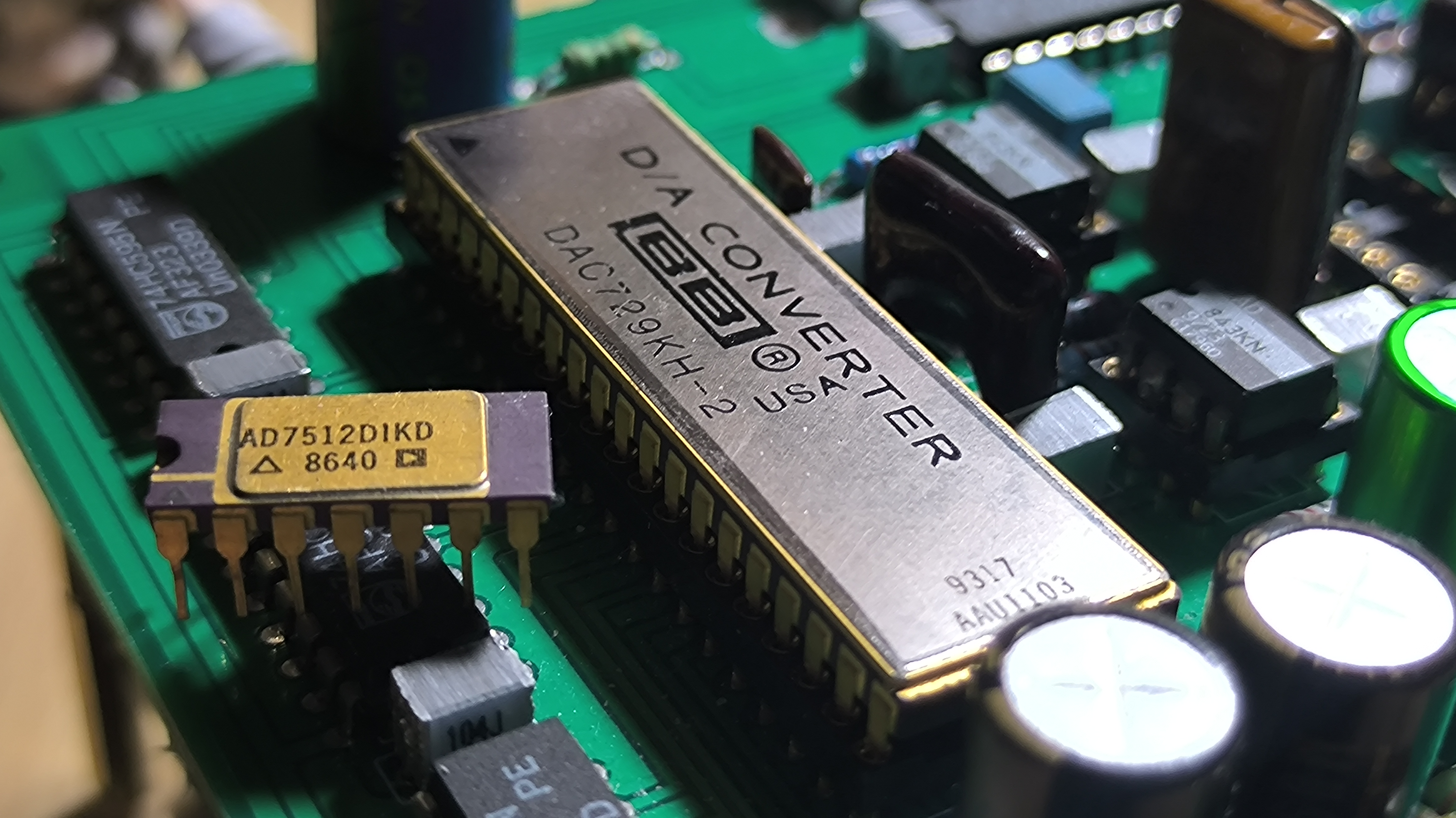
Output Stage
The DAC729 includes a built-in high-performance, low-drift I/V converter, so I used the voltage output directly.
Four op-amps total:
- Two for sample-hold followers
- Two for Sallen-Key active filtering (critical for NOS systems to remove high-frequency digital artifacts)
Vintage + Innovation: The Hybrid Approach
All-Out Vintage Component Selection
The entire signal path uses vintage high-grade components:
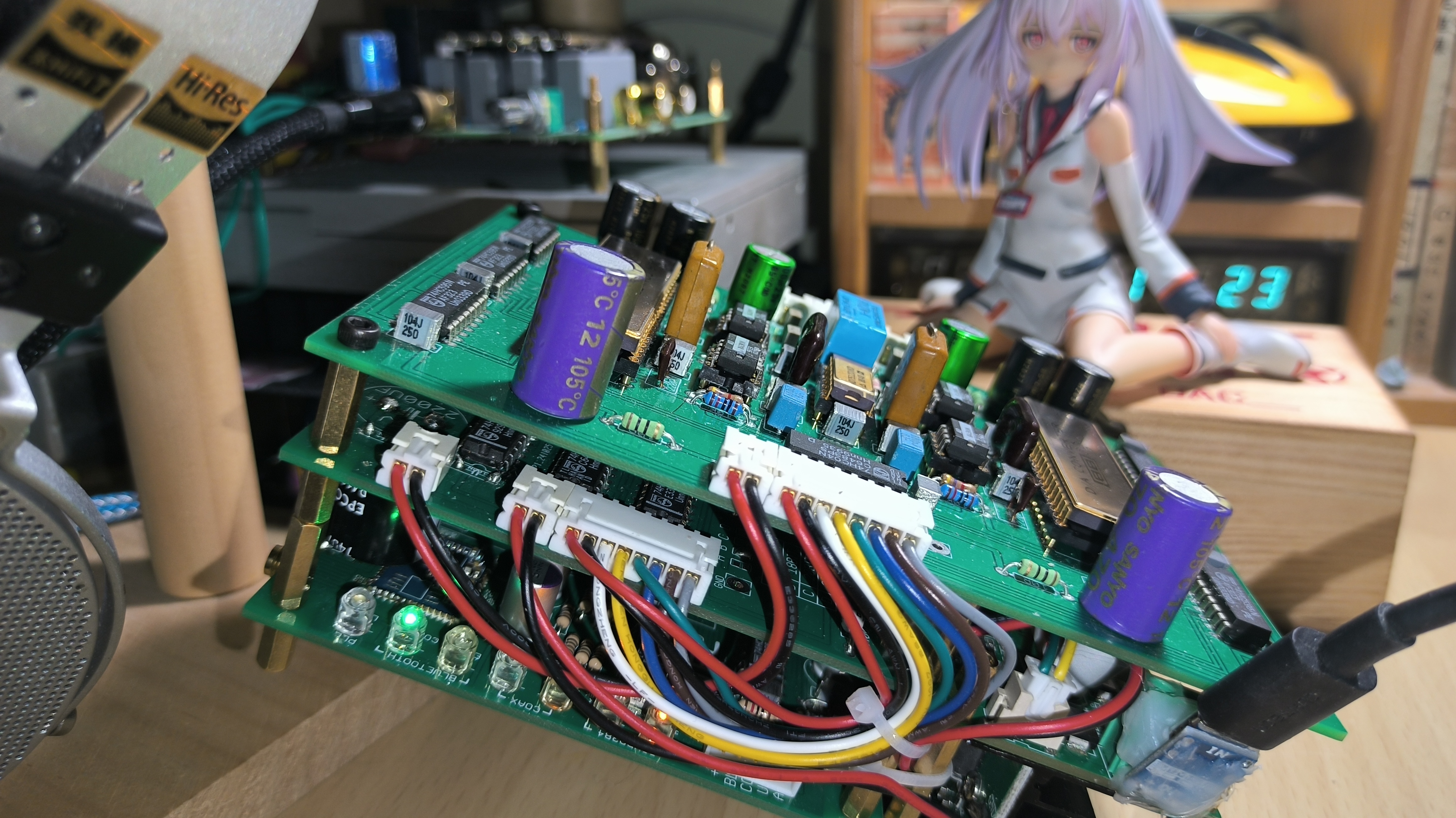
- Large-body mica capacitors throughout
- Power supply decoupling with 1990s golden-era ELNA Cerafine / Nichicon MUSE / Sanyo SP capacitors
- This is my most aggressively “parts-stuffed” project ever
Modern Innovation: Stacked PCB Architecture
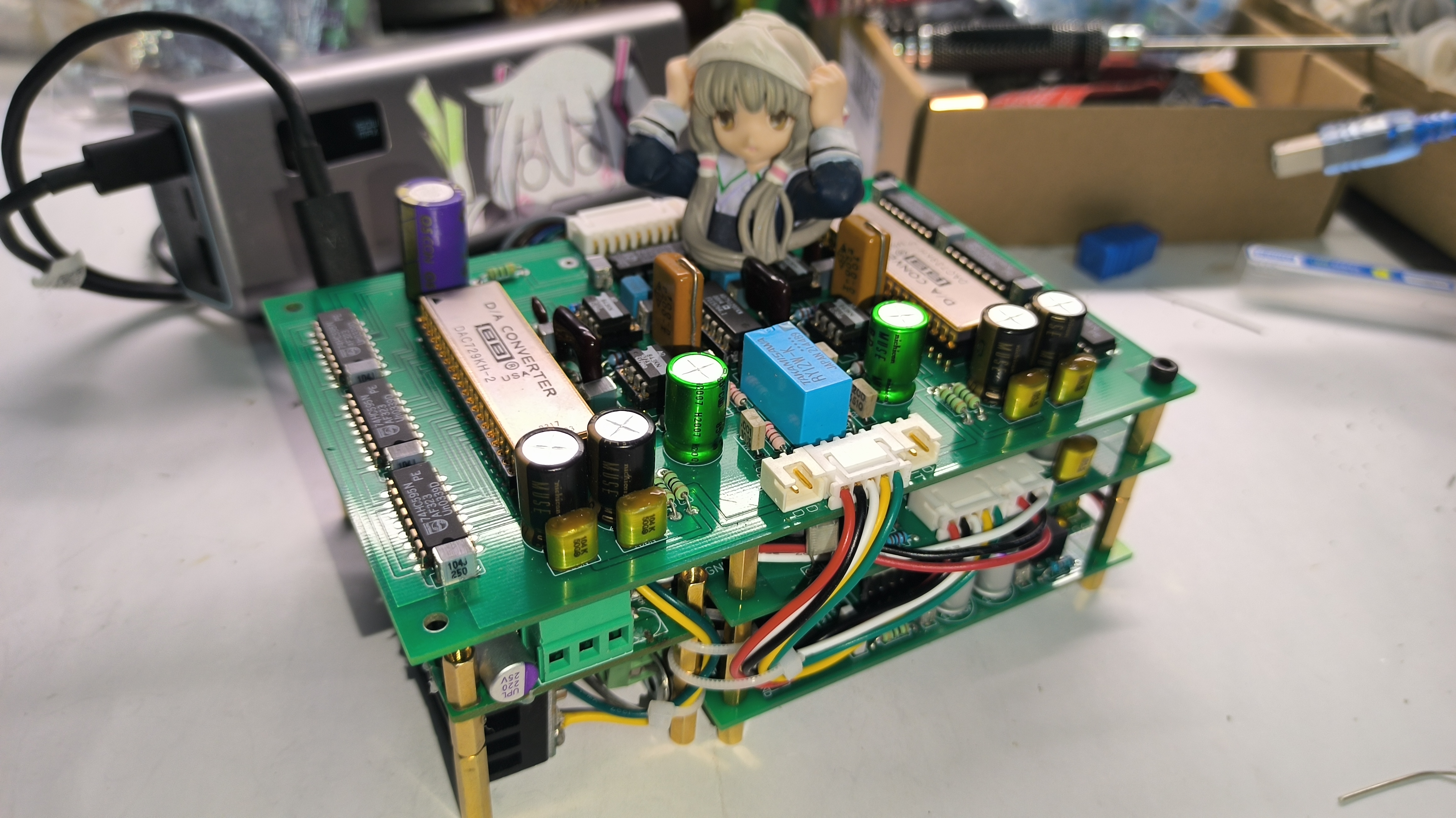
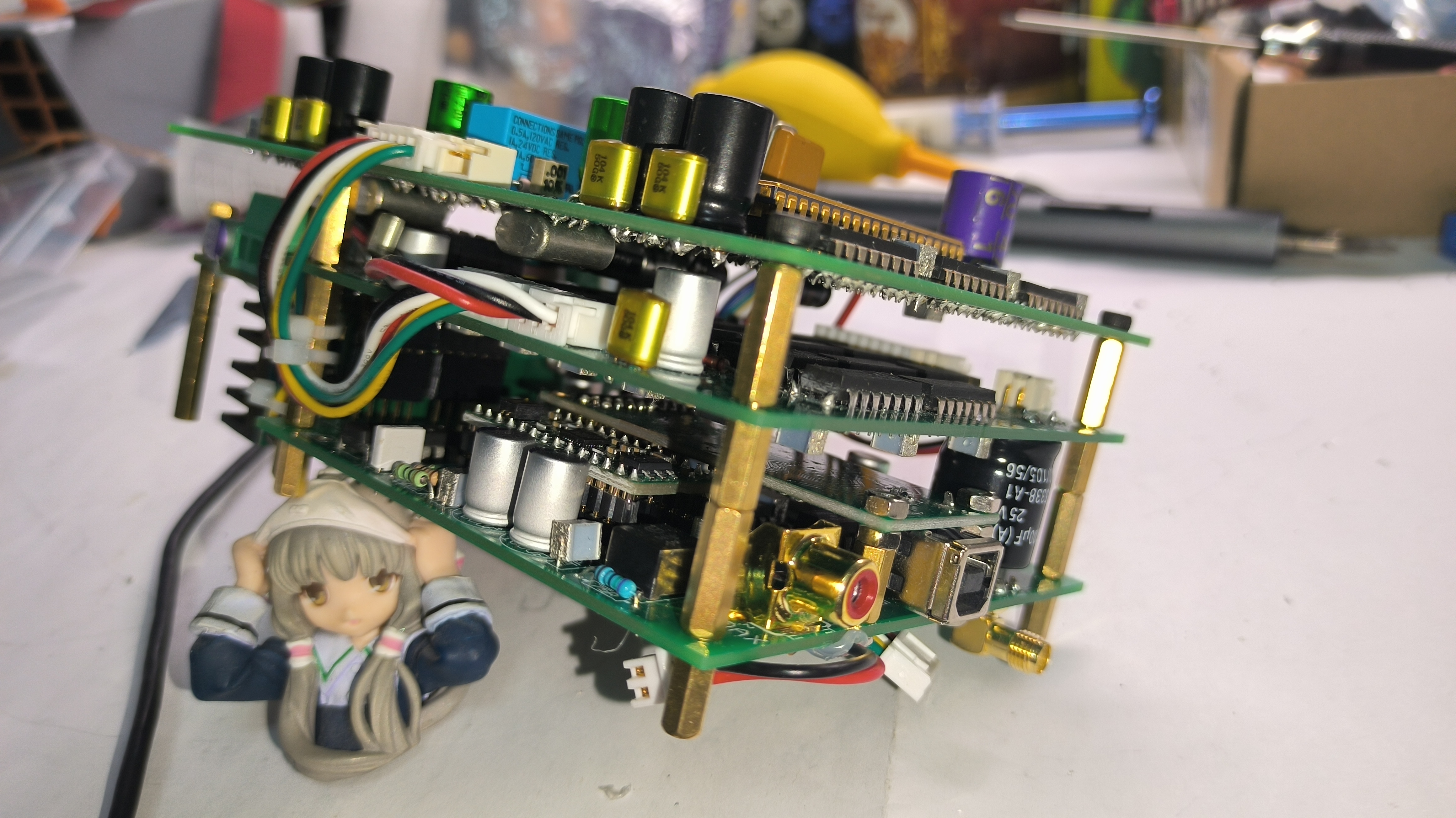
Despite the vintage component choices, I implemented a modern three-layer stacked design:
Top Layer: DAC729 decoder + analog backend
Middle Layer: 74-series digital logic circuitry
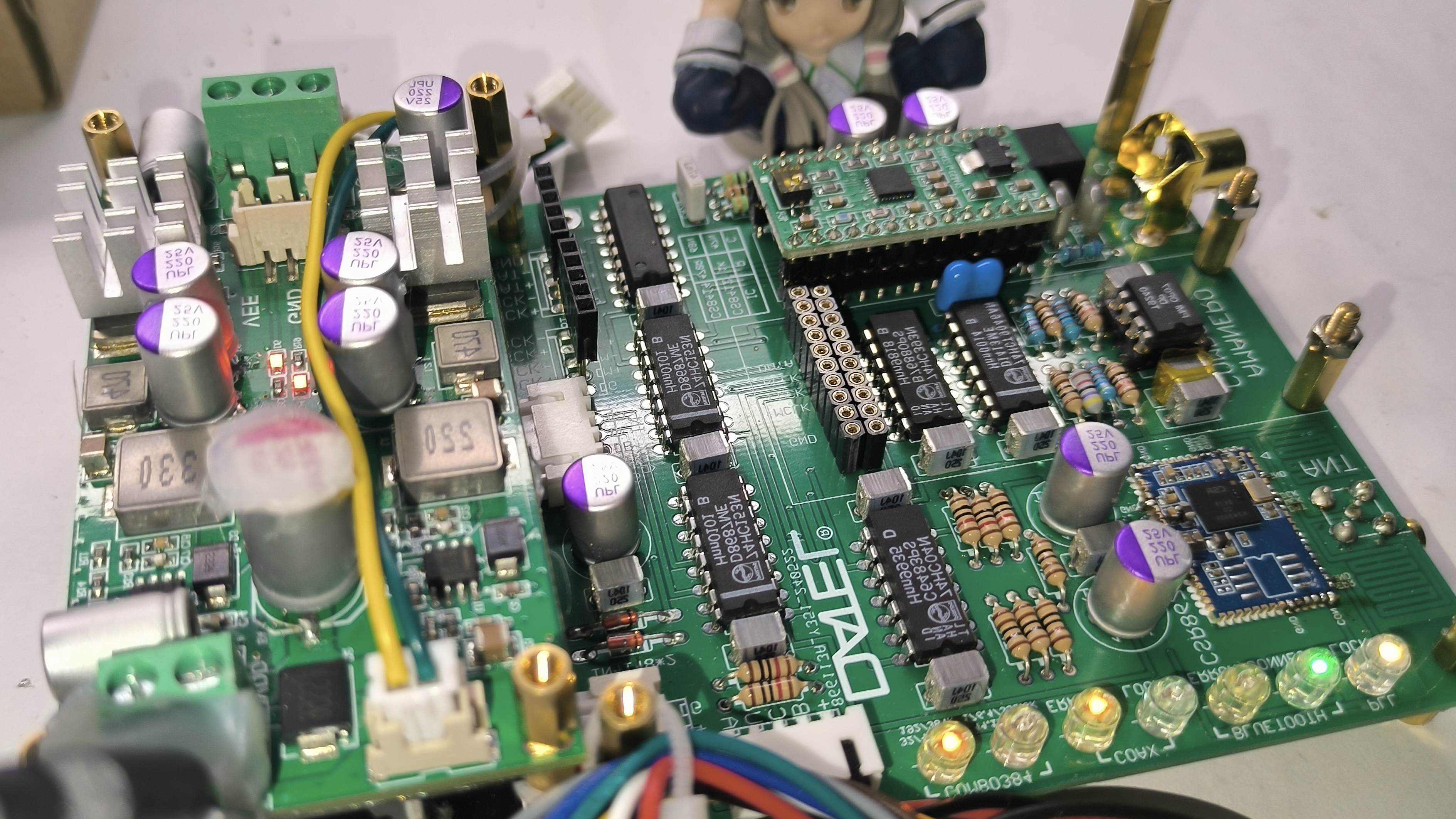
Bottom Layer: Digital input receivers (USB, optical, coaxial) + CSR8675 Bluetooth module (LDAC support)
Innovative Power Supply Design
Breaking with traditional Hi-Fi conventions (no massive toroidal transformers), I used USB-PD 20V power bank supply:
Challenge: DAC729 and op-amps need ±15V rails
Solution:
- Two TPS54360 buck converters generate ±18V intermediate rails
- LT1963/LT3015 high-PSRR LDOs suppress ripple to generate clean ±15V finals
- Result: Low-noise, high-precision bipolar supply
The power supply board dimensions perfectly match the decoder board - a satisfying geometric stack!
Performance Results
Electrical Measurements *2025 updated
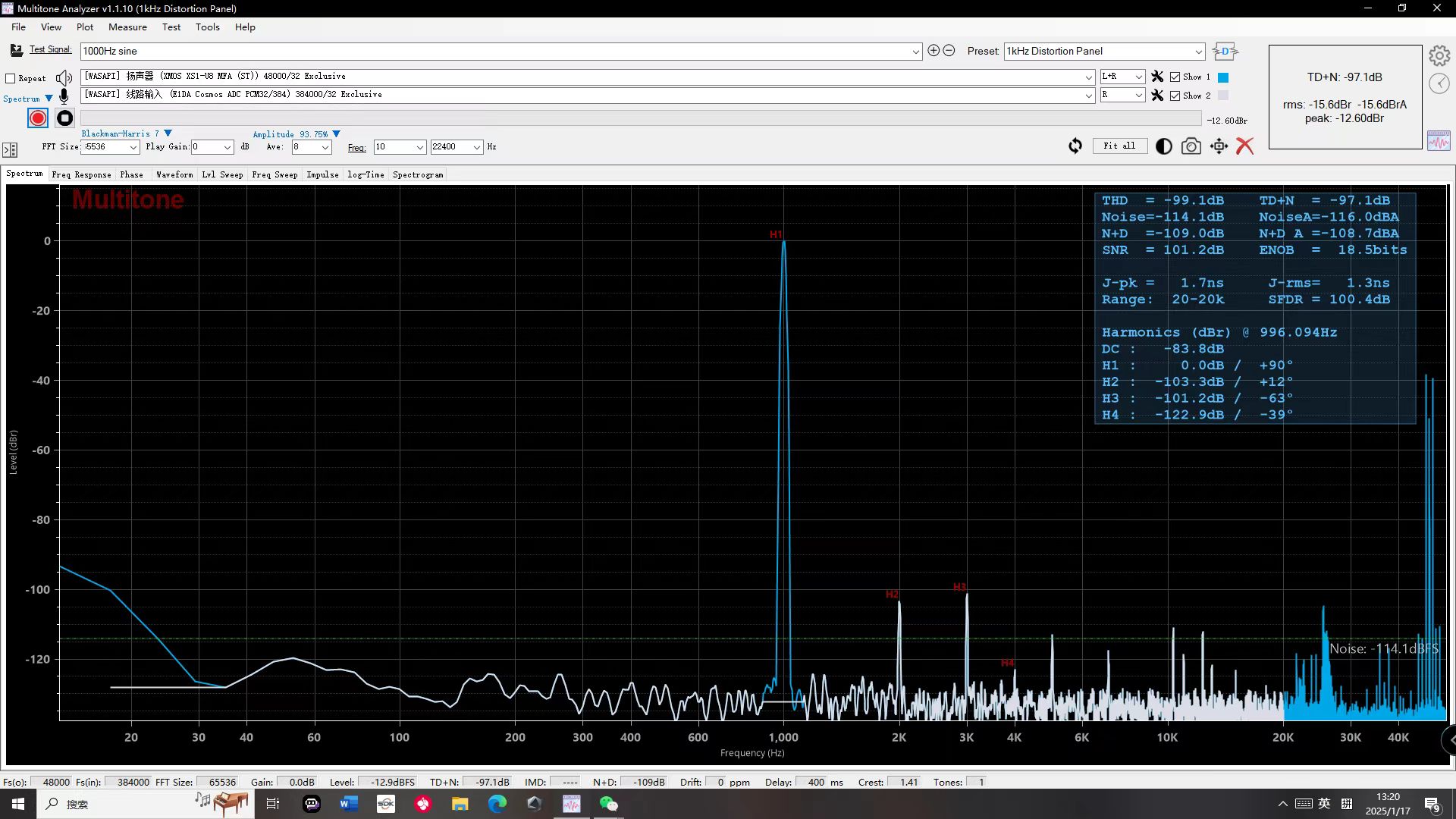
Fully extracted the DAC729’s potential. Thanks to excellent linearity (it’s an ultra-precision DAC, after all), this decoder achieved:
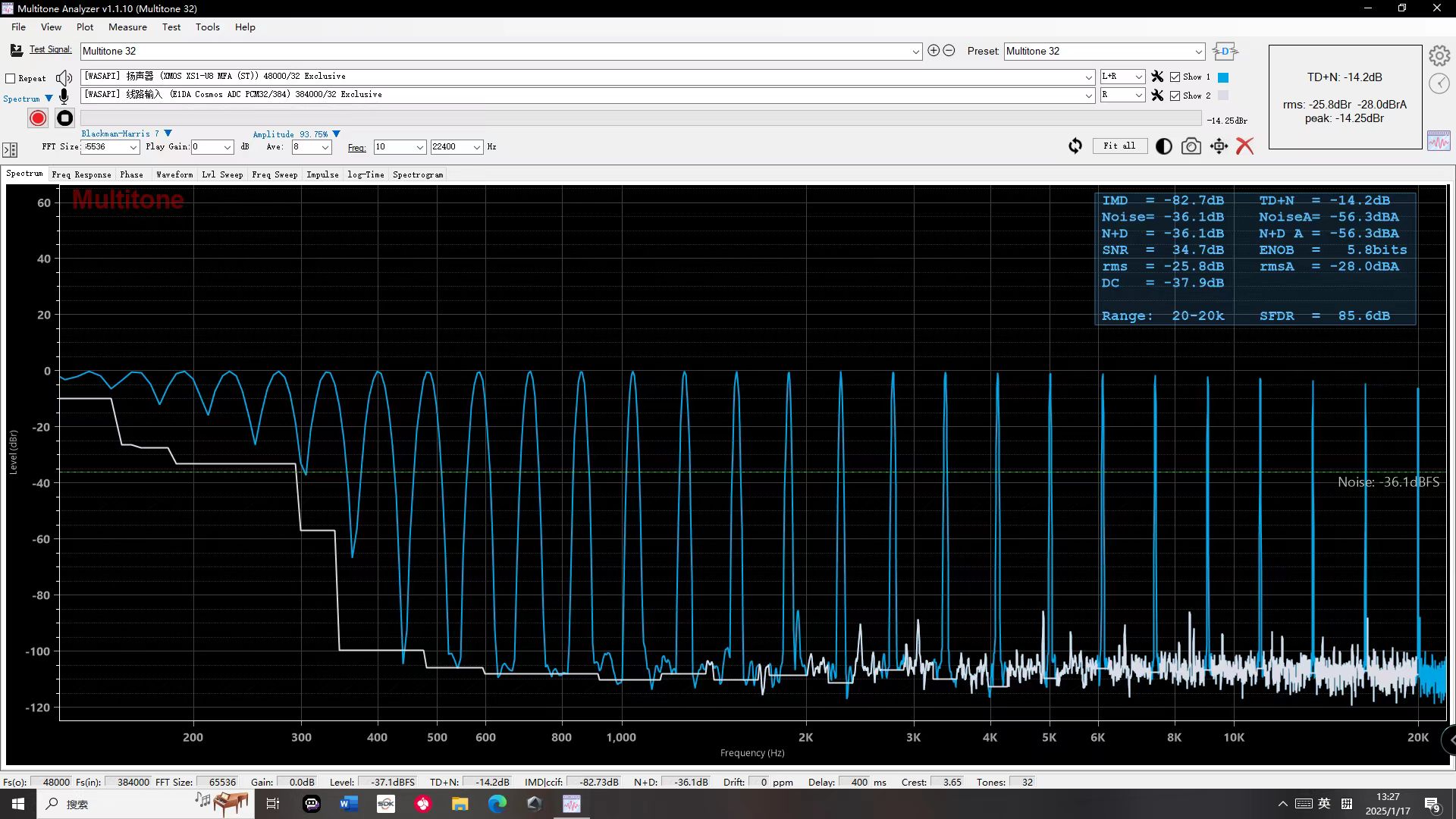
- THD: -99.1 dB - very close to the 18-bit theoretical limit!
- ENOB: 18.5 bits (calculated from THD+N, likely slightly optimistic but impressive nonetheless)
Additional Test Results
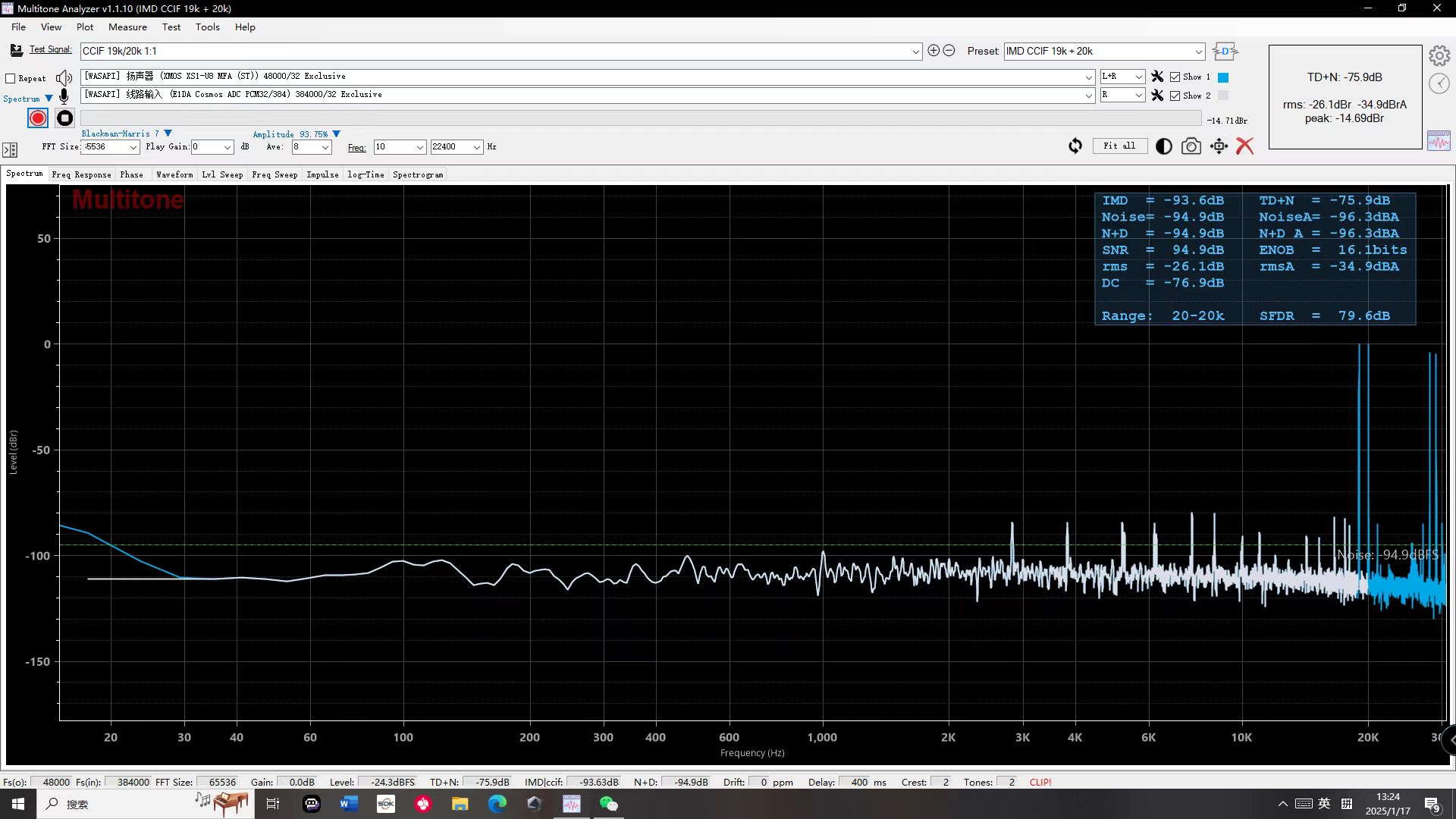
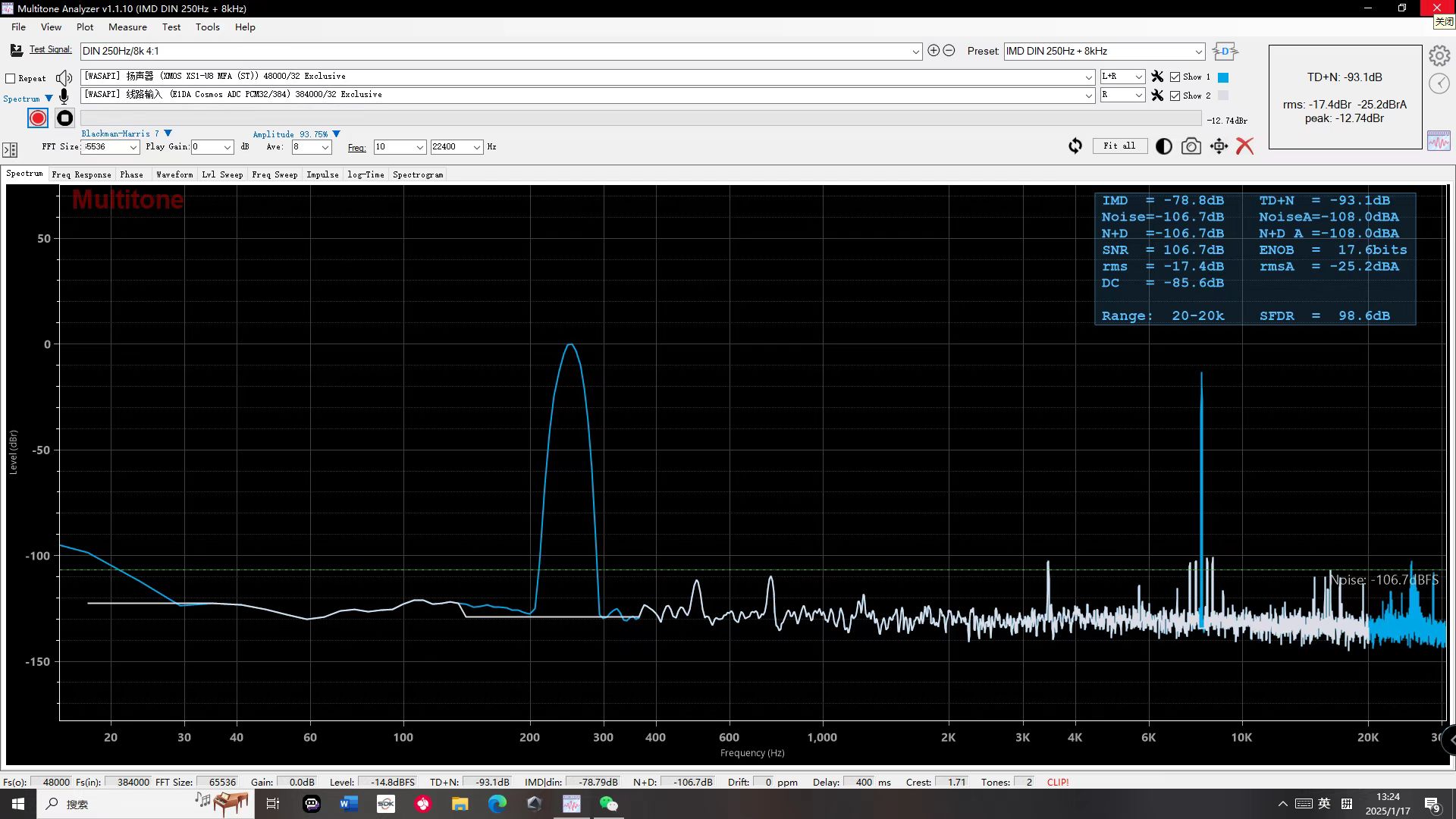
IMD Tests:
Multitone Analysis:
Key Takeaways
- Vintage silicon still performs - 1990s precision analog holds up remarkably well
- NOS + R2R = pleasant sound signature - there’s a reason audiophiles love this topology
- Discrete 74-series logic is viable for audio sample rates (though FPGA would be easier)
- Stacked PCB architecture enabled compact form factor without sacrificing signal integrity
- DCDC + LDO power supplies can deliver audiophile-grade noise performance
- Component matters - vintage parts contributed to the overall aesthetic and sound character
Lessons Learned (2026 Perspective)
Looking back after 4+ years:
- High-speed layout matters - those 90° traces weren’t ideal, even if they worked
- Documentation is crucial - losing the original schematics makes this hard to replicate
- Community credit - should have better documented which designs came from hifidiy forum
- Overengineering is fun but not always necessary
- This project taught me respect for vintage precision analog design
About the DAC729 Chip - A Deep Dive
The Burr-Brown DAC729 is an ultra-high-resolution 18-bit digital-to-analog converter system from the early 1990s. It represented the pinnacle of precision DAC technology in its era:
- Hybrid structure combining monolithic DAC die, precision thin-film resistors and op-amp.
- Hermetic packaging for long-term stability (30+ years old and still work perfectly!)
Architecture:
- Resolution: 18 bits (262,144 discrete levels)
- DAC Type: R-2R ladder network with segmented current sources
- Package: 40-pin hermetic ceramic DIP (CerDIP) with gold-plated pins
- Internal Reference: Precision 10V reference with <4ppm/°C drift
- Internal Op-Amp: Low-noise, fast-settling amplifier with current buffer
Performance (from datasheet):
- Linearity Error: ±0.0015% FSR (JH), ±0.00076% FSR (KH) - that’s 16-bit linearity!
- Differential Linearity: ±0.003% FSR (JH), ±0.0015% FSR (KH)
- Settling Time: 8µs to 16 bits (voltage output mode)
- THD+N: Typically better than -105dB (open-loop!)
- Output Noise: 29µVrms (bipolar offset, 10Hz-100kHz)
- Gain Drift: ±3ppm/°C (KH grade)
- Monotonicity: Guaranteed to 16 bits (KH), 15 bits (JH)
Grade Differences:
The datasheet officially lists two grades:
- DAC729JH: 16-bit linearity guaranteed, ±0.0015% linearity error
- DAC729KH: Higher-grade version, ±0.00076% linearity error (twice as good!)
Both grades can be user-adjusted to 18-bit linearity using the built-in MSB trim circuits.
The Mystery: What is “KH-2”?
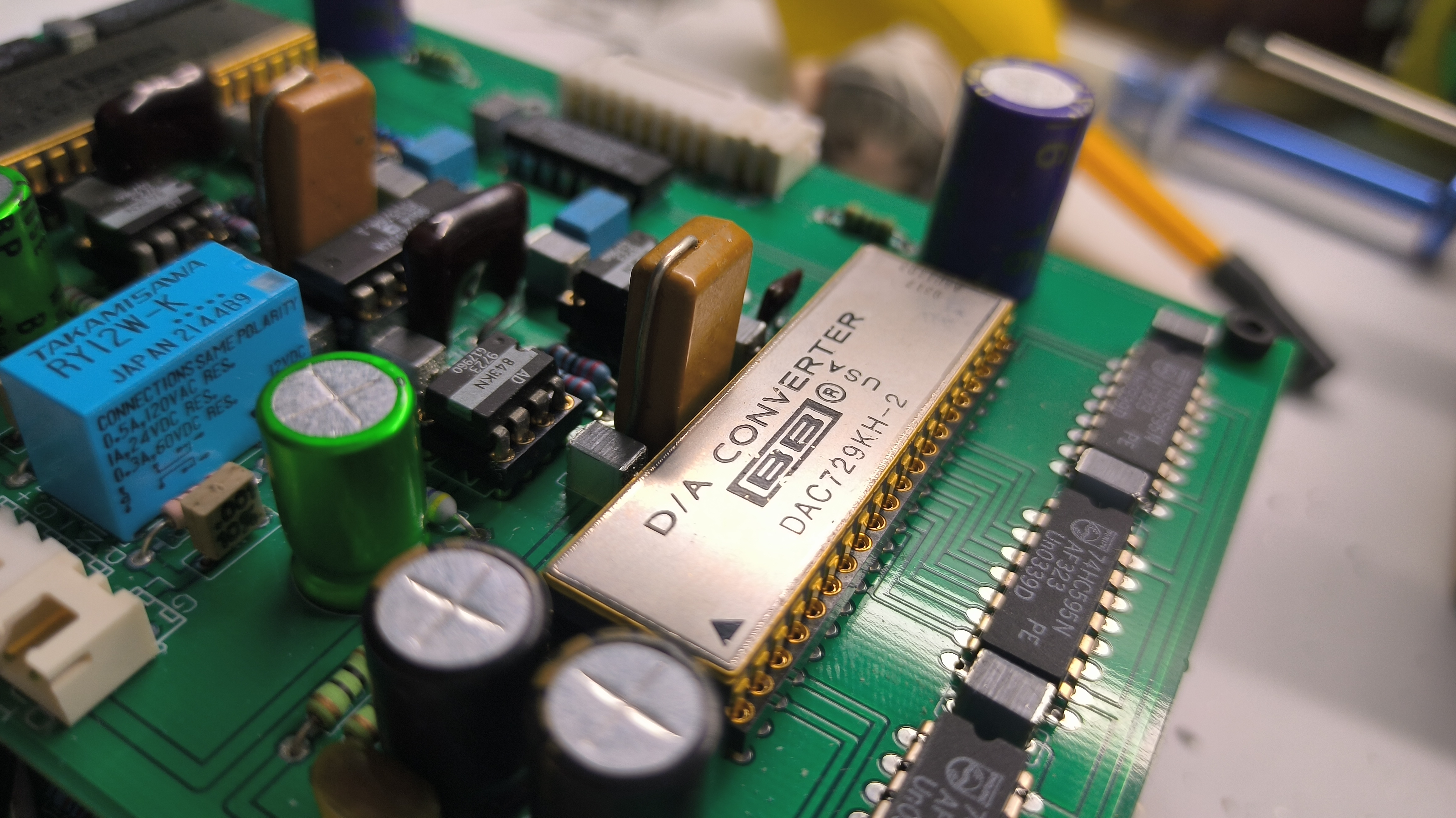
Here’s where things get interesting. My chips are marked DAC729KH-2, but this suffix does not appear anywhere in the official Burr-Brown datasheet. The datasheet only mentions:
- DAC729JH
- DAC729KH
- DAC729KH-BI
Possible explanations for the “-2” suffix:
- Abbreviation - “-2” in short of “-BI”, indicating burn-in screened version
- Bin sorting - Perhaps “-2” indicates a specific performance bin within KH grade
- Undocumented military/aerospace grade - Some vendors had additional grades for specialized applications
If anyone knows what “KH-2” means, I’d love to hear from you in the comments below!
Resources & References
- DAC729 Datasheet (Burr-Brown, included in project files)
- Original design discussions on hifidiy forum (now unavailable due to their server updates)
This is the first of many project migrations. More vintage builds, modern designs, and questionable decisions to come. Stay tuned.
Part of my engineering journal documenting 5+ years of audio DIY adventures. For more polished current work, see Technical Projects.