GPS-Disciplined Oscillator (GPSDO) - Achieving 40ppb Accuracy
📝 AI Assistance Disclosure (click to expand)
This technical documentation has been proofread by Claude-Sonnet-4 for readability, grammar, and formatting consistency. All technical content, project details, circuit designs, measurements, and conclusions have been verified and approved by the author.
Interested in my personal writing style? Check out my Stories & Writing for 100% human-authored content.
Project Overview
The GPS-Disciplined Oscillator (GPSDO) project aims to create a precision frequency reference by locking a high-quality oven-controlled crystal oscillator (OCXO) to GPS timing signals. This project achieved at minimum 40 parts-per-billion (ppb) long-term frequency accuracy (limited by testing device).
System Architecture
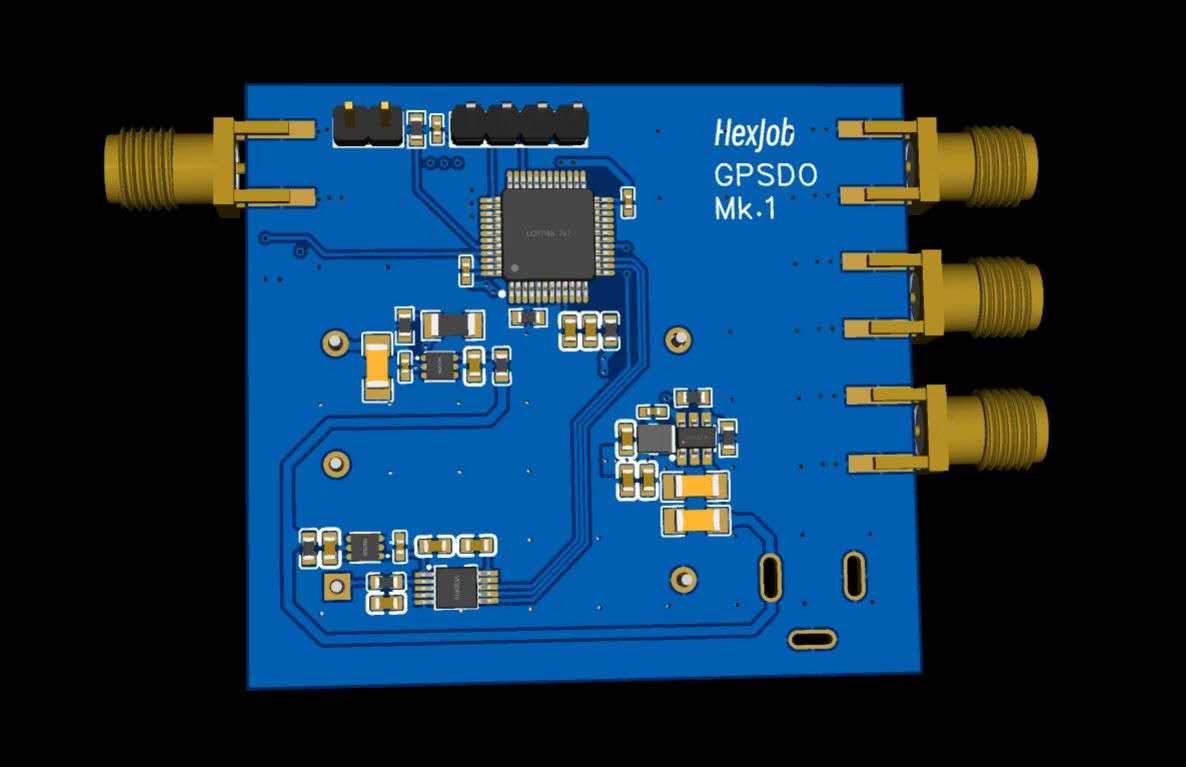
The system consists of several key components:
Core Hardware
- Microcontroller: STM32F030 running at 48MHz
- OCXO: CTI OC12SC36 with ±20ppm initial accuracy (salvaged from used signal generator)
- GPS Module: u-blox NEO-6M with 1PPS output
- DAC: 12-bit DAC7563
- DAC: CDCV304PWR(REV1) / LMK1C1104(REV2)
Control Algorithm
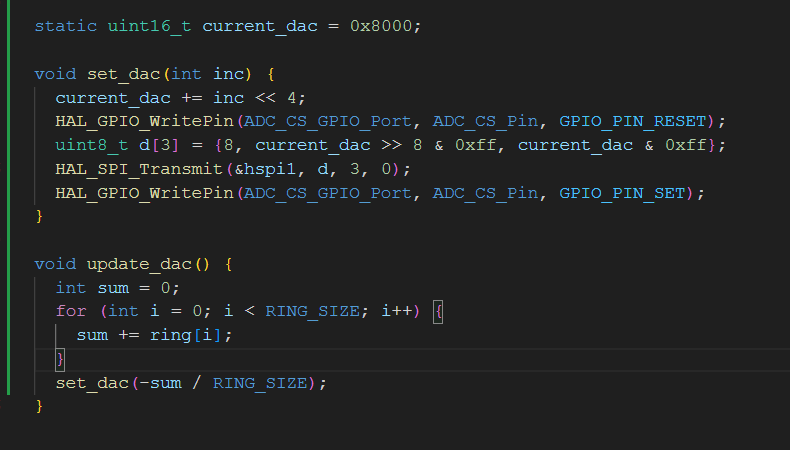
The heart of the system is a custom diverging control algorithm with dead-zone handling:
1 | |
The algorithm uses a ring buffer to average phase measurements, implementing a form of PI control with adjustable gain.
Technical Challenges & Solutions
Challenge 1: Component Substitution
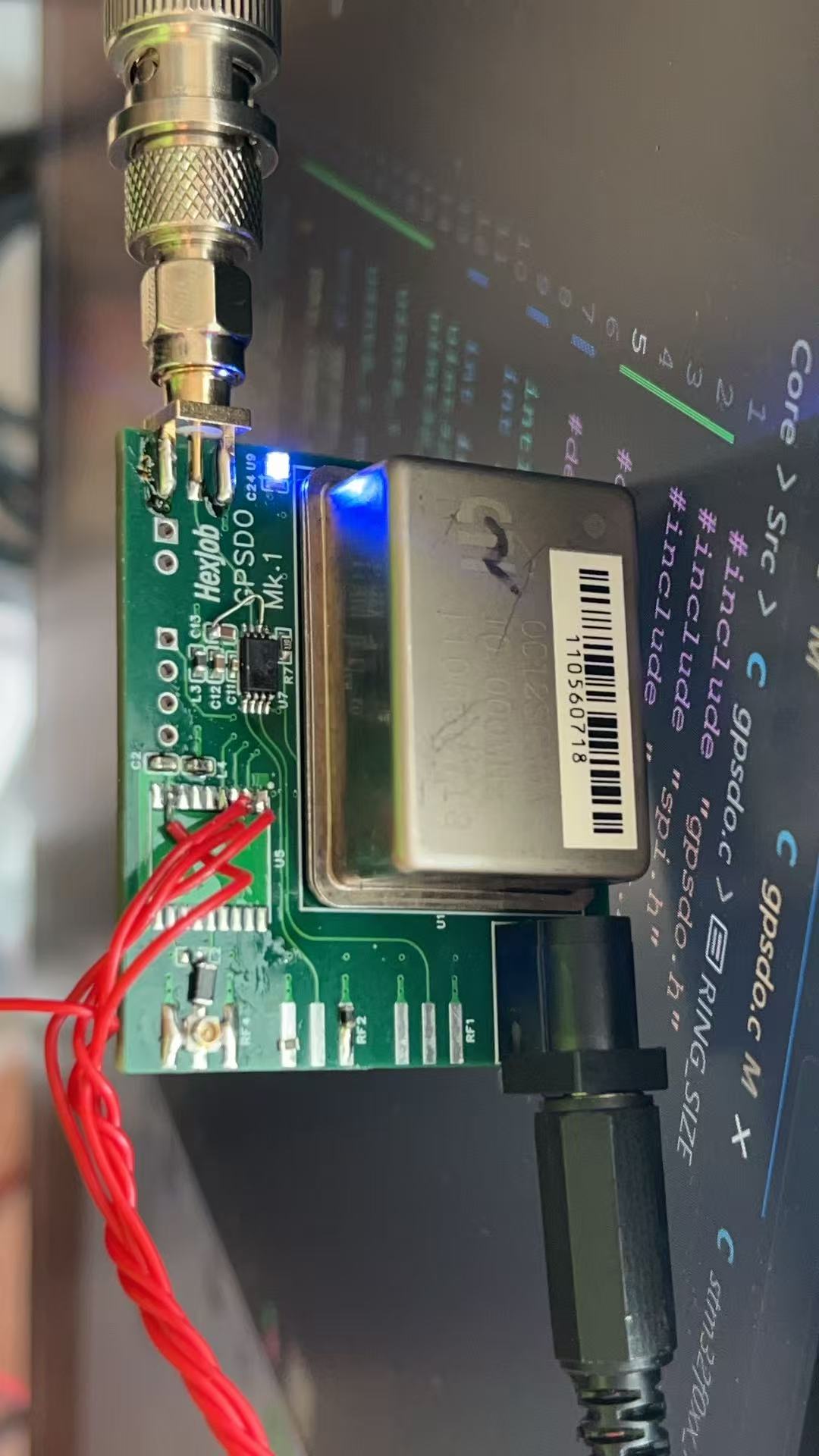
When my specified clock buffer went out of stock, I selected a pin-compatible alternative without thoroughly reviewing the datasheet. The replacement lacked internal pull-up resistors on the enable pin, resulting in unpredictable behavior.
Solution: Hot-wired a jumper directly to the PCB - a reminder that every datasheet detail matters!
Challenge 2: Control Loop Instability
Initial testing revealed oscillation in the control loop when the OCXO approached lock.
Solution: Getting rid of PID, I developed a custom diverging algorithm with dead-zone control. When phase error falls within ±2 counts, the system stops adjusting, preventing hunting behavior.
Measurement Results
Testing was performed using Keysight CXA signal analyzer and EXG vector signal generator as reference.
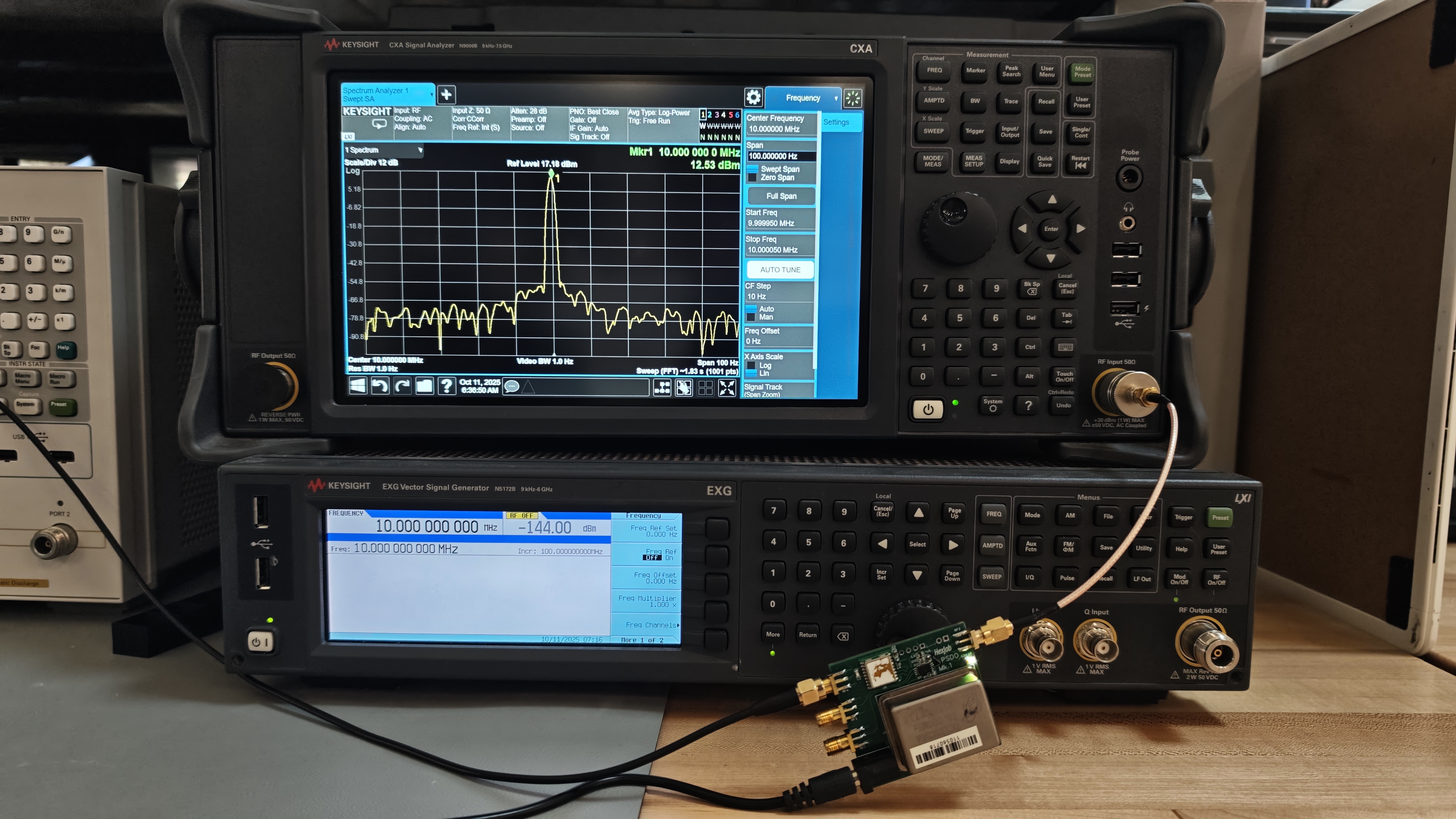
The spectrum analysis shows:
- Center Frequency: 10.000000 MHz (exact)
- Output Power: +12.06 dBm
- Phase Noise: Better than -70 dBc/Hz at 1Hz offset (limited by testing equipment)
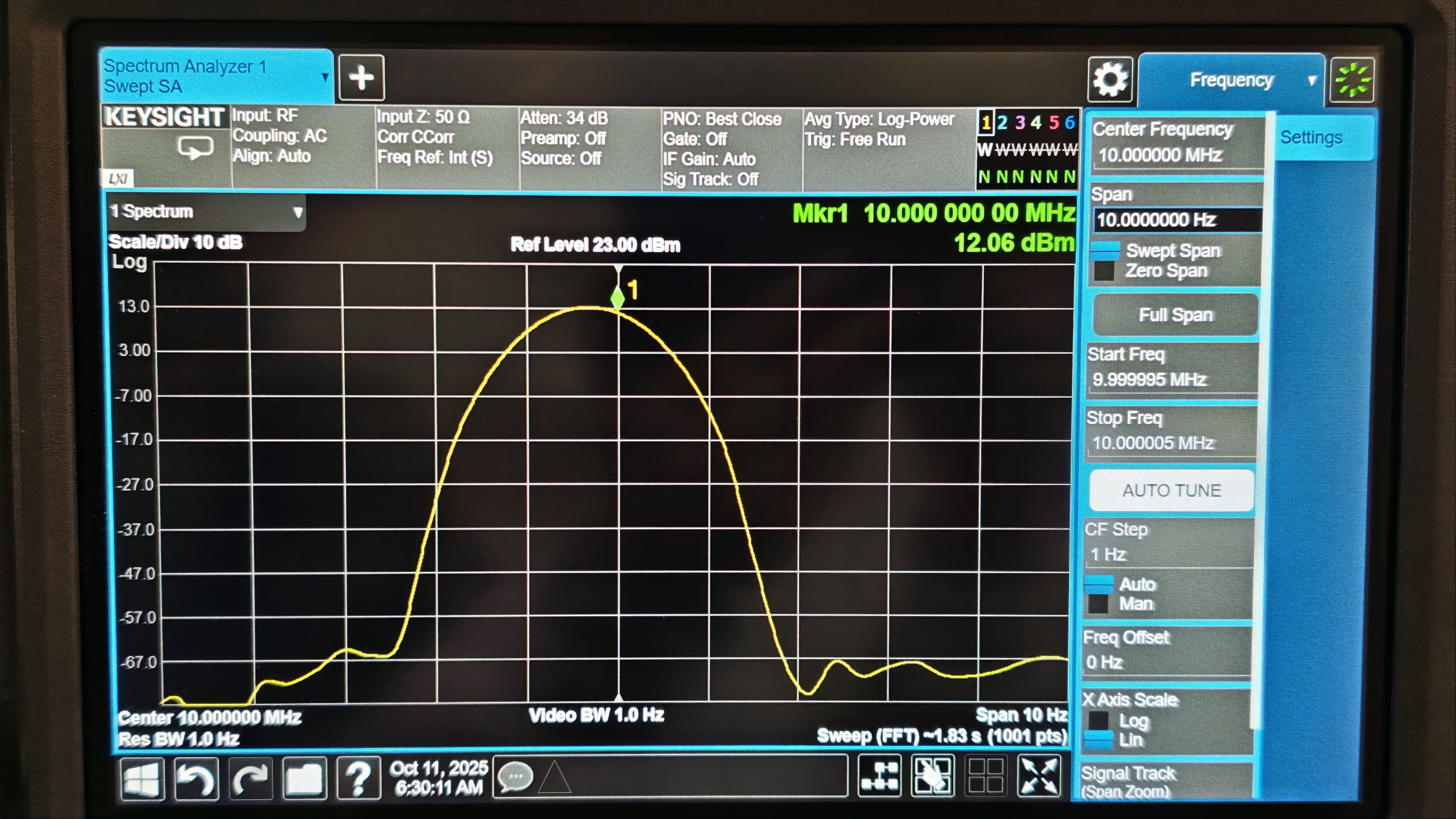
With a 10Hz span and 1Hz resolution bandwidth, the signal shows excellent short-term stability with no visible sidebands or spurious content.
PCB Design Notes
The PCB was designed in Altium Designer with the following considerations:
- 4-layer stackup: Signal-Ground-Power-Signal for optimal EMI performance
- Thermal isolation: The OCXO section is thermally isolated from the MCU and GPS module
- Star grounding: Analog and digital grounds meet at a single point under the DAC
- Controlled impedance: 50Ω traces for the RF output path
Future Improvements
- Kalman Filter Implementation: Replace the simple averaging with a Kalman filter for better noise rejection
- Custom PCB Rev 2: Fix the thermal issues with proper copper pour optimization
- GPS Holdover: Add a rubidium backup for GPS signal loss scenarios
- Remote Monitoring: Add WiFi/Ethernet for SNMP-based monitoring
Applications
This GPSDO is suitable for:
- Amateur radio frequency calibration
- Test equipment reference
- Time-nuts experiments
- SDR frequency stabilization
Resources
- Schematic: Available on request
- Firmware: GitHub Repository (coming soon)
Have questions about this project? Feel free to reach out via the Contact page.