The Sound of Innovation
The projects shown here were engineered during my high school years. They might not be the most technically sophisticated work I’ve done, but they represent the foundation of my engineering philosophy.
📝 AI Assistance Disclosure (click to expand)
This note has been lightly edited with Claude_Sonnet 4.5 for clarity, grammar, and markdown formatting consistency. All technical content, observations, and perspectives are my own.
Seeking my authentic voices? See Stories & Writing for 100% human-authored content.
Looking for polished project documentation? Check out Technical Projects.
The Moment Everything Changed
It was a quiet afternoon in a marketplace audio store when everything clicked into place. I had just plugged a set of Venus Planar open-back headphones into the store’s CFA3 headphone amplifier and pressed play on my favorite song. The sound that filled my ears wasn’t just music anymore; it was as if I were sitting at the piano myself, feeling each key strike resonate through the soundboard.
But reality hit hard when I checked the price tag. The CFA3 cost $3,995, and occupied as much desk space as a desktop computer. This wasn’t something most people could ever afford, let alone fit in their homes. That’s when the question formed in my mind: Why should exceptional audio quality be a luxury reserved for the wealthy?
That question became my obsession.
The Late-Night Workshop
I started small, working in my bedroom-turned-workshop, usually from 2 AM to dawn when the house was quiet and my divorced parents’ separate households were asleep. The CFA3‘s design relied on manually matched transistor pairs - a time-intensive process that justified its astronomical price and bulky form factor. But I knew there had to be a better way.
Through months of trial and error, I discovered the solution: replacing through-hole components with surface-mount technology, implementing dual transistor configurations, and utilizing 6-layer PCB overlay. The breakthrough came on a particularly cold December morning. After my fifth prototype iteration, the analyzer readings showed -110dB THD+N - matching the CFA3’s legendary performance - but in a device one-eighth the size and costing just $80 in parts.

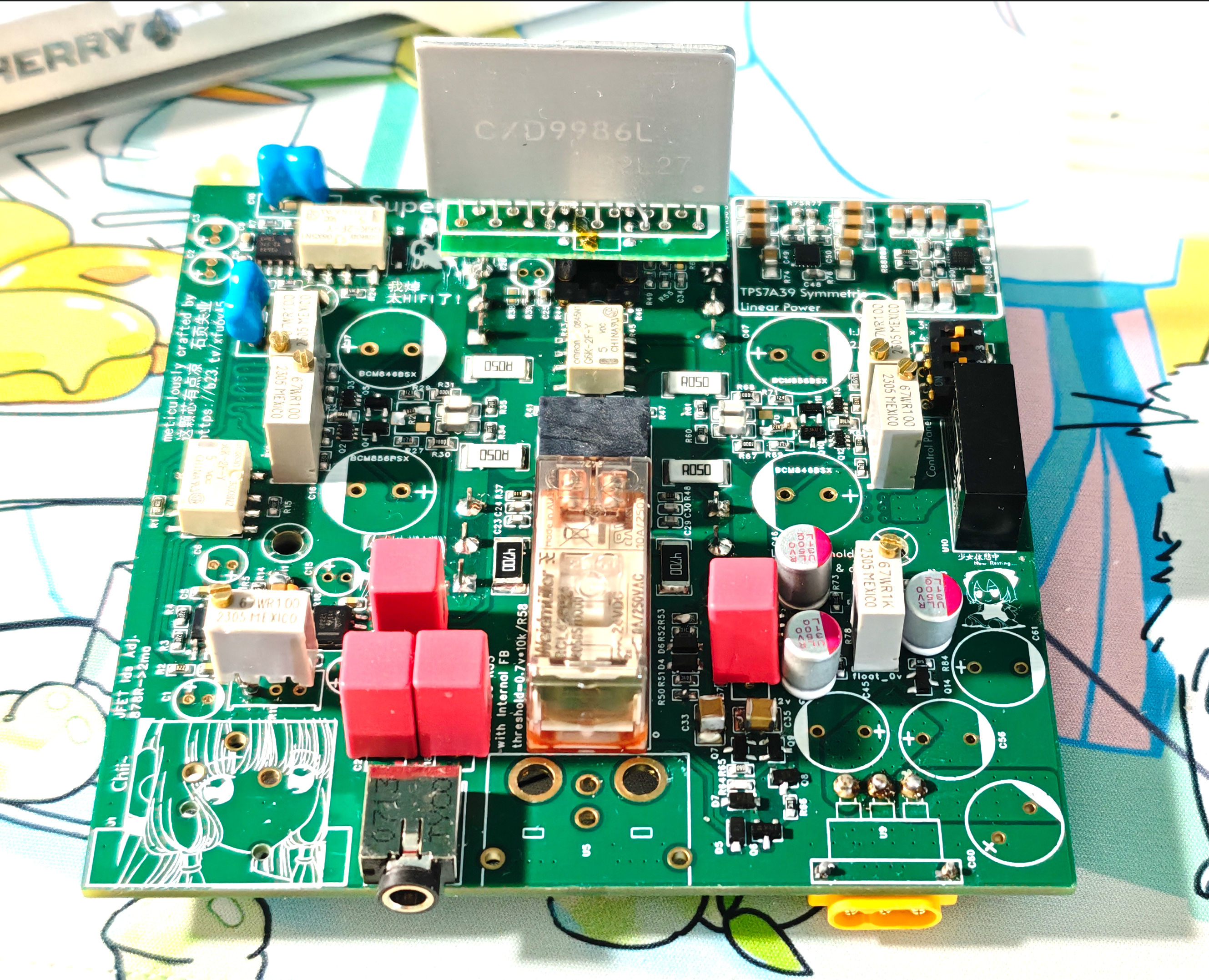
The Miniaturized CFA3 (left), and my newly-released Super FDA (right) - All featuring high-density SMT circuitry
An Unexpected Connection
When I posted my design and measurements on Head-Fi forums, I expected some feedback from fellow audiophiles. What I didn’t expect was a direct message from the CEO of Moondrop - the very company that made those Venus Planar headphones that started this journey.
“I founded Moondrop with the same dream you’re chasing,” he wrote. “Making exceptional audio accessible to everyone shouldn’t be a dream - it should be our mission.” He invited me to visit their headquarters, where we spent hours discussing not just amplifier topology and THD measurements, but the philosophy of democratizing high-fidelity audio.
“You should start your own amplifier brand,” he told me as our meeting concluded. That conversation didn’t just validate my work - it crystallized my entire career vision.
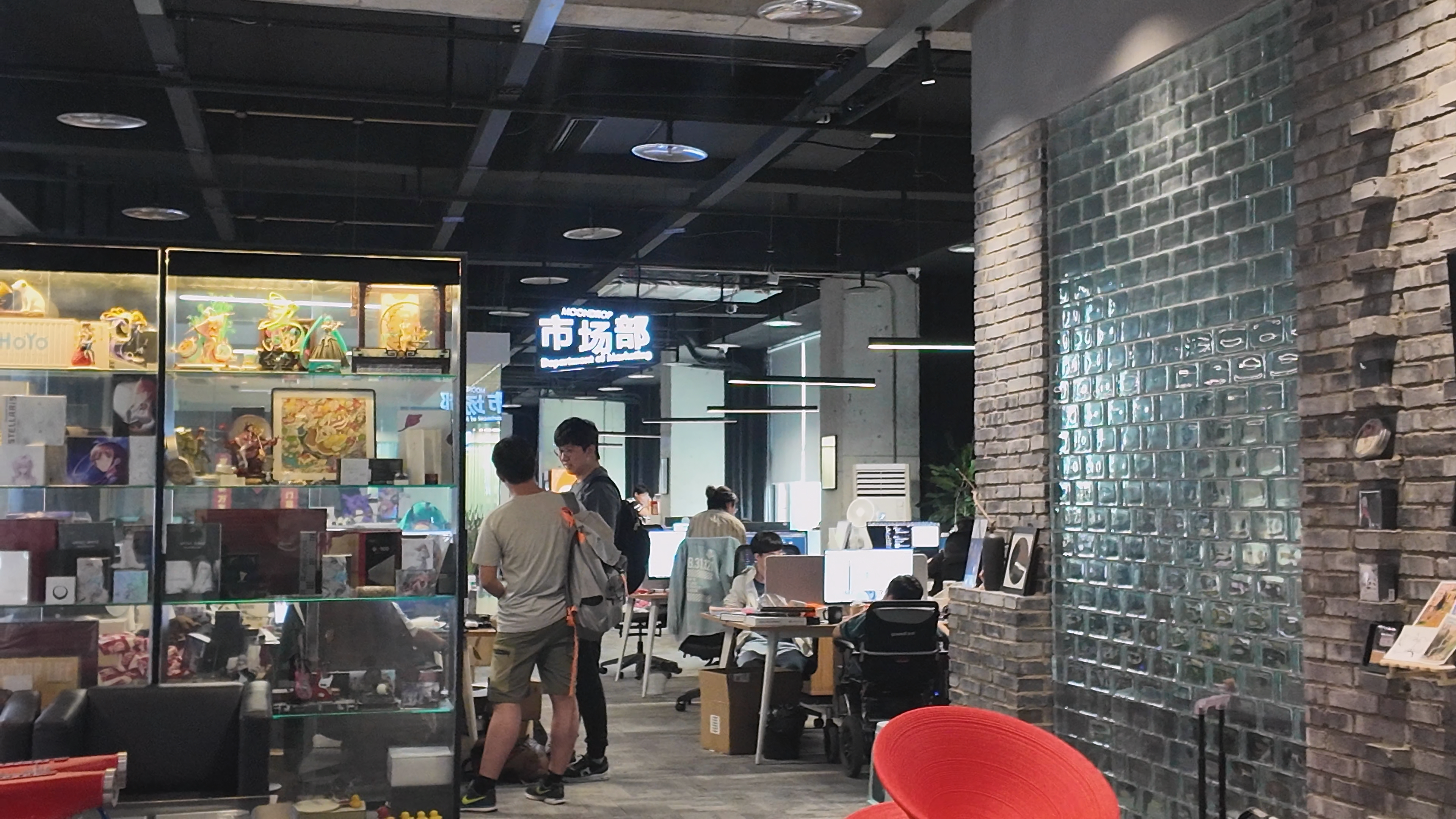
Meeting with the Moondrop CEO at their headquarters in Chengdu - a conversation that shaped my career path
Calculated Risks, Meaningful Rewards
Thirty Meters Down
My identity as a risk-taker extends far beyond the electronics workbench. It was on my final day in Bali, on my last dive of the trip, that I truly understood what calculated risk means.
The ocean currents had been uncooperative all week - no major sightings, just endless blue water. But I knew Bali’s famous manta rays were out there, and they congregated near the seabed at thirty meters. Going that deep meant serious risks: nitrogen narcosis, decompression sickness if I had to surface quickly, and of course, the very real possibility of seeing nothing but sand.
As bone-chilling water seeped into my wetsuit and I forcefully inserted my spotlight into the silt, I heard my dive computer’s alarms counting down. My guide was already preparing to ascend. Then my light beam caught something - a massive shadow gliding overhead. Within seconds, an entire squadron of manta rays appeared, their wingspans easily exceeding four meters, floating just a meter above me as gracefully as clouds.
That moment, watching those magnificent creatures in their element while managing the complex dance of decompression stops and air consumption, taught me something profound: the most rewarding experiences in life - whether thirty meters underwater or hunched over a circuit board at 3 AM - require both technical competence and the courage to push beyond comfortable boundaries.
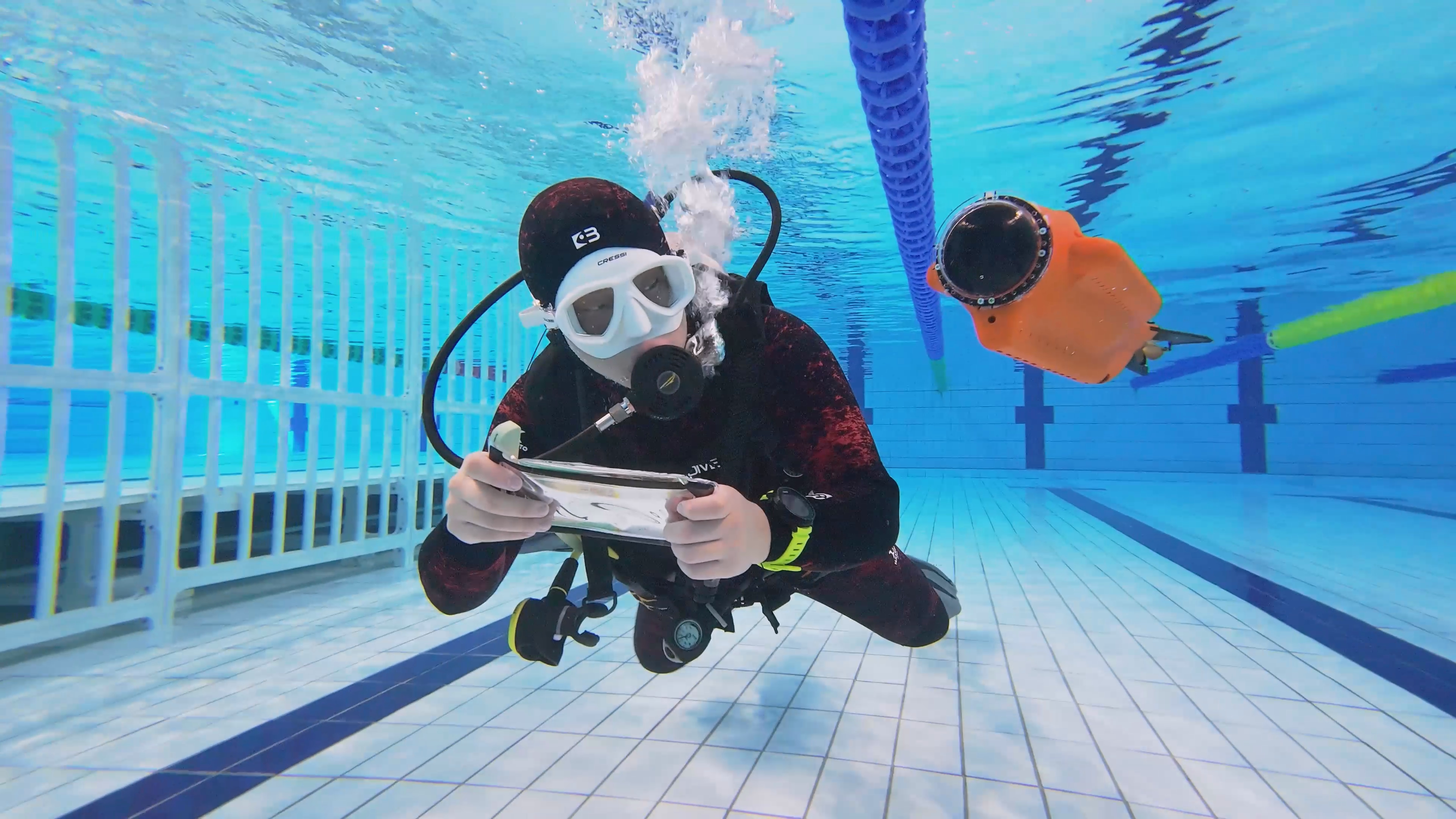
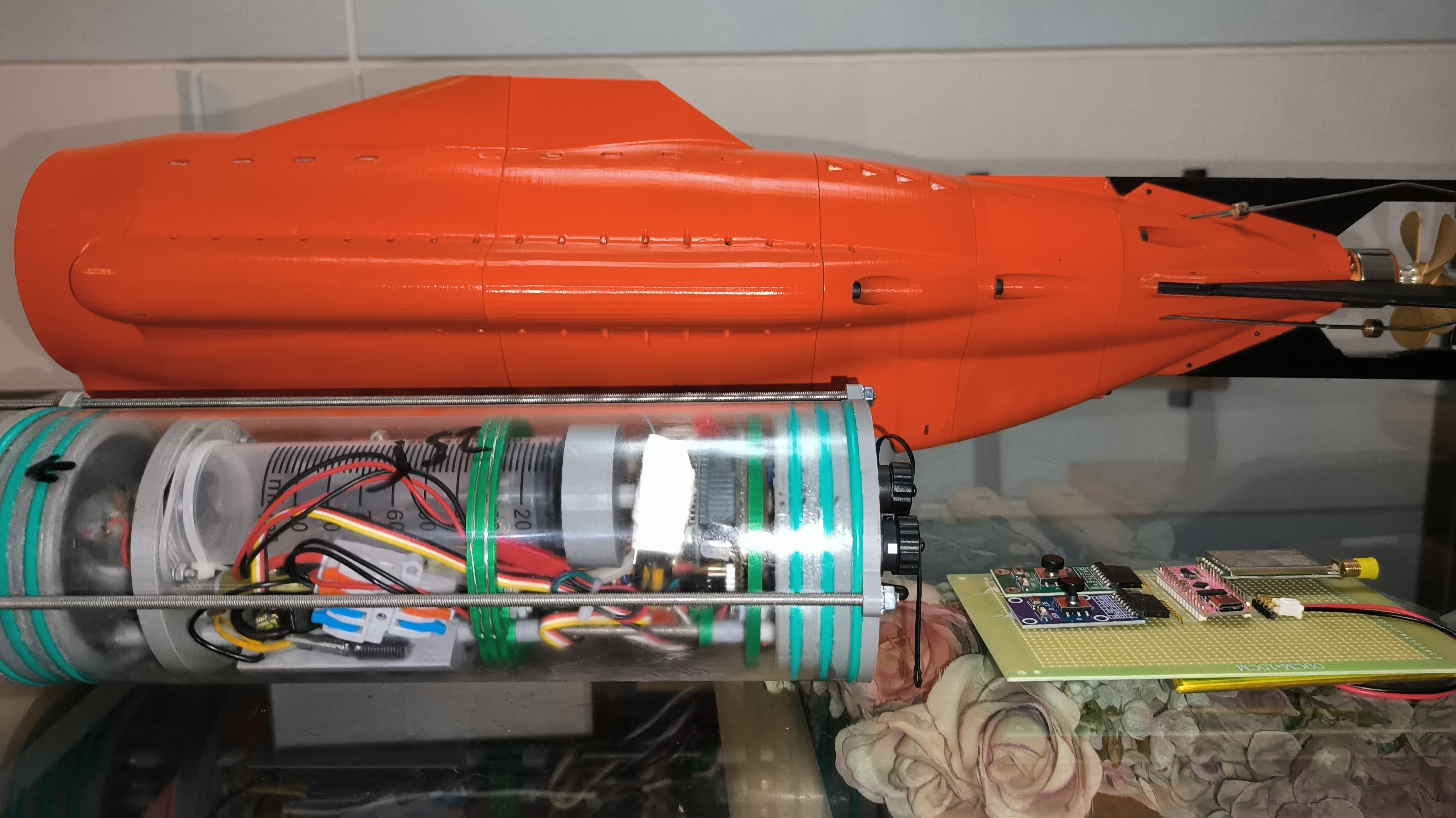
My dive-buddy robot project
Over 50+ dives across sites Southeast Asia and the Pacific, I’ve earned my PADI Master Scuba Diver certification with specializations in debris management and coral reef conservation. I founded my high school’s scuba diving club, not just to share the technical aspects of diving, but to pass on this philosophy: some experiences are worth the calculated risk.
What Drives Me
I’m not just an engineer who builds things - I’m someone who believes technology should be a force for human connection. Every project I undertake, whether it’s designing companion robot for divers or modernizing classic amplifiers, starts with the same question: How can this technology improve people’s lives and become accessible to them?
My Engineering Philosophy:
Innovation with Purpose: Technology for technology’s sake is just intellectual exercise. Real engineering solves real problems. My CFA3-inspired amplifier makes high-fidelity audio affordable. My dive-buddy robot aims to make technical diving safer for solo divers. My GPSDO project brings laboratory-grade frequency standards within reach of amateur radio operators and makers.
Democratizing Excellence: The best technology should not be locked behind prohibitive price tags or institutional walls. Through open documentation, detailed Bilibili videos, and accessible designs, I strive to make professional-grade engineering knowledge available to anyone with curiosity and determination.
Calculated Risk-Taking: Innovation requires stepping into uncertainty. But risks should be calculated, not reckless. Whether it’s diving to 30 meters or implementing Avionics circuits for our LOX rocket, I always balance ambition with safety, creativity with rigor.
Community Building: Engineering is not a solitary pursuit. As VEX Robotics Club president, I expanded our membership by 25% and led our team to the global finals. As a content creator, I’ve built a community of 10,000+ subscribers. Knowledge multiplies when shared, and innovation accelerates through collaboration.
Where I Am Now:
- 🎓 Currently: Sophomore at Georgia Tech studying Electrical Engineering with a Robotics minor (GPA: 4.00)
- 🚀 Active Projects:
- Avionics HITL Responsible Engineer at Yellow Jacket Space Program (YJSP)
- Electrical engineer at HyTech Racing (Formula SAE Electric)
- Embedded systems engineer at Interactive Music Group VIP
- 🔧 Technical Expertise:
- Analog circuit design (operational amplifiers, precision ADC/DAC systems)
- FPGA development (Verilog HDL, Artix-7/ZYNQ platforms)
- PCB layout (Altium Designer, multi-layer boards)
- Embedded systems (STM32, AVR microcontrollers, RISC-V programming)
- 🌊 Adventures: PADI Master Scuba Diver with 50+ open water dives, coral conservation specialization
- 📹 Content Creation: 1M+ views on Bilibili with 10K+ subscribers, contracted product reviewer for Moondrop
- 🏆 Recent Achievements:
- Champion Team - IEEE Robotech 2026 Hackathon (Chief Electronic Engineer)
- VEX Asia-Pacific Robotics Championship - First Prize & Global Finals qualifier
- Georgia Tech InVenture Prize participant - $1,000 seed funding for energy harvesting project
- 💼 Professional: Generated $1,000+ in revenue through custom electronics products, contracted technical vlogger
Current Focus:
Right now, I’m deep into several exciting projects. My μCHIMERA energy harvesting system is pushing the boundaries of battery-free wearables, my work at YJSP involves designing precision emulation systems for rocket avionics testing, and I’m continuously exploring the intersection of analog precision and digital control in my personal projects.
But beyond any single project, I’m focused on building the foundation for my long-term goal: launching my own audio electronics company that makes laboratory-grade performance accessible to enthusiasts and professionals alike, just like that conversation with Moondrop’s CEO inspired me to do.
The Road Ahead
As I continue my journey at Georgia Tech, I’m constantly reminded of the audio store moment - the spark that ignited my passion for accessible, high-quality engineering. Whether I’m debugging FPGA timing constraints at 3 AM, leading my Hackathone team through a challenging build, or planning my next diving expedition, I carry the same philosophy:
“A lot can go wrong on a dive, in an experiment, or anywhere else, for that matter. But a lot can also go right.”
The calculated risks are worth it. The late nights are worth it. Because ultimately, engineering isn’t just about solving technical problems - it’s about making the impossible accessible, turning dreams into reality, and inspiring others to do the same.
Want to dive deeper into my technical work? Explore my Technical Portfolio. or Download my Resume
Curious about the stories behind the circuits? Visit my Stories & Writing Portfolio.
For ongoing updates and quick technical notes, check out the Tech Notes.